Work around the Subject
This idea applies as much to pictures of your cat, your holiday, or a pretty flower as it does to a commissioned shoot for a magazine. I cannot emphasise enough the importance of this approach.
It means not stopping once you’ve got a usable picture. It means taking a lot of photos.
It means: get low, high, close, far. Shoot wide, then upright. Different angles. Poses, props. Come back at dusk. Play around with shutter speeds. Change the surroundings. Move stuff about. Bring stuff in. Steal an idea from something similar you saw on Instagram.
In reality, we normally only have a few of these options available, depending on what we’re photographing, how long we have, and what we’re trying to show.
The point isn’t to try everything. It’s to attempt to answer the (eternal) question: What’s the picture? Working around the subject is a way to answer it, by asking the other question: What else can I do?
First, get the ‘safety shot’
While essential, the safety shot is very rarely the Shot. No: it gives us something to react to. It helps put us in the ballpark. What needs changing? Exposure? Background? The subject’s jacket? Something distracting at the edge of the frame? Composition?
(And if nothing else, should everything else go wrong, at least we have something usable.)
Different pictures say different things
Changing the picture isn’t (just) about producing more options for selecting later. Every variation emphasises a different facet of the subject: move closer and one thing becomes dominant, simplified. Step back, and it’s now more about scale and the environment. Change the angle, the expression, the background, the crop, the foreground and you change what the photograph is saying.
To put it another way: the thing we noticed - the reason for the photo and what we’re communicating - will be better shown, or differently expressed with each frame.
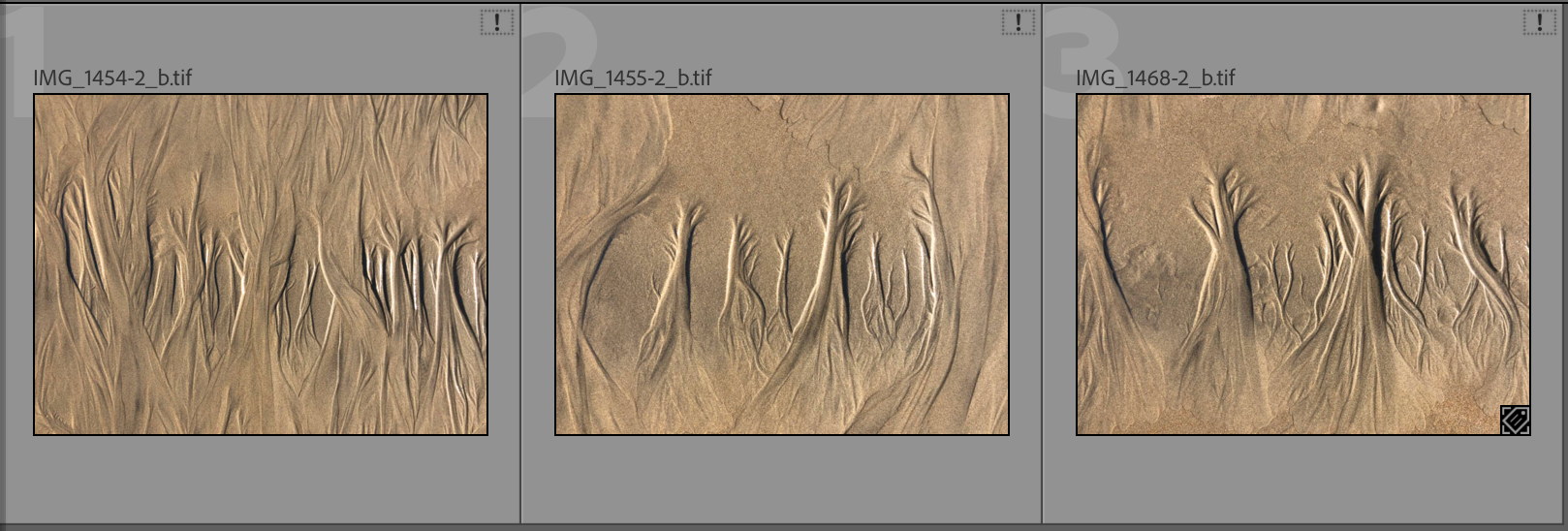
Three images (from many more!) showing sand on a beach. What drew me to it was the resemblance to trees. The image on the left looks like a forest, full and busy. The middle image is simpler, with the ‘trees’ spread out and separate. The third image (right, and below) is contrasty and punchy.
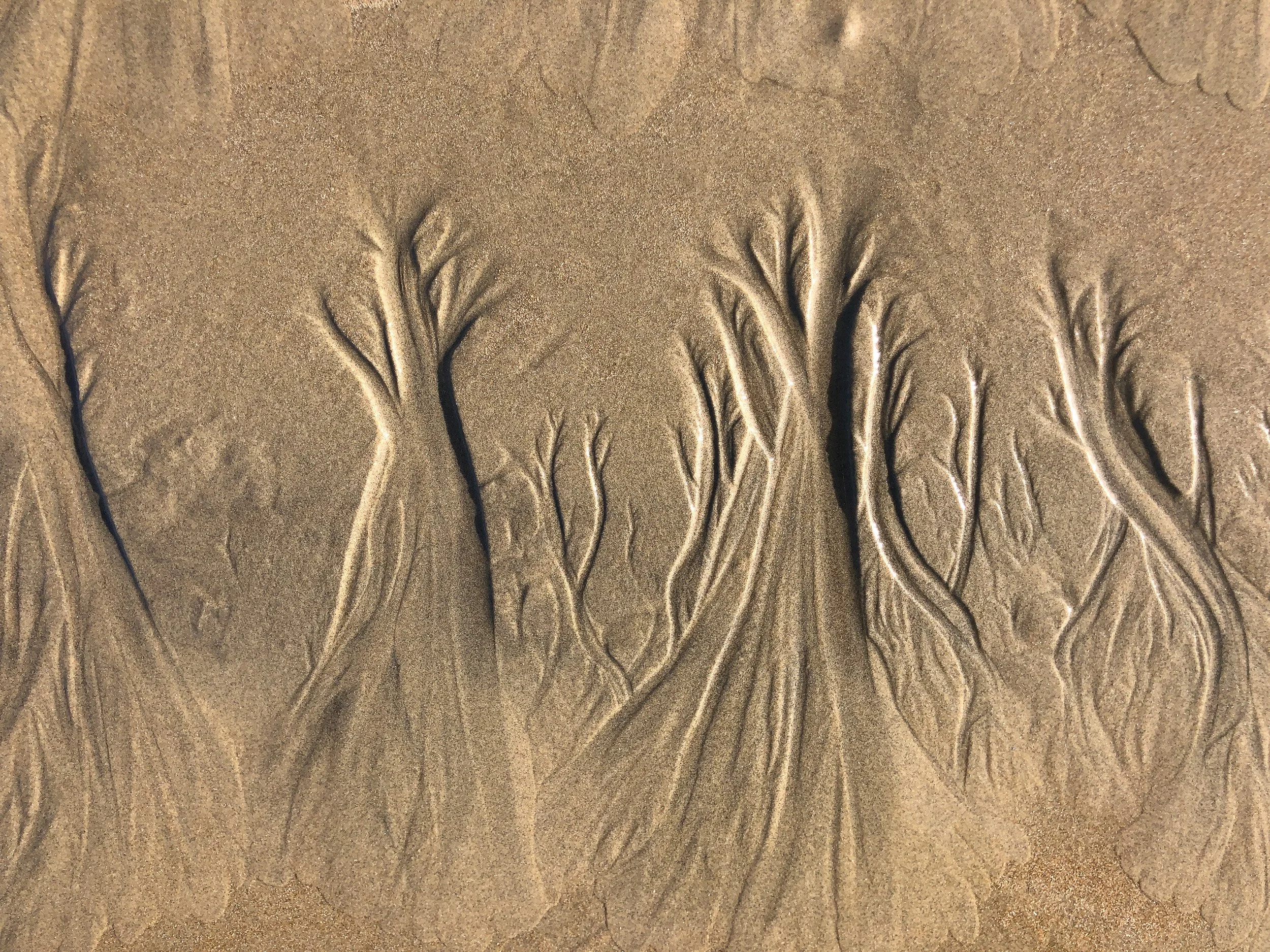
On balance, I felt this one showed best what I’d noticed in the first place. Working round the subject in this situation meant moving along the shore.
Art for art’s sake
I shoot a lot of pictures which never see the light of day. I just take them for the sake of taking them: even if I recognise they’re not very strong in the moment, the process is still often worth engaging with. The act of taking pictures itself can be enough: noticing, and reacting. Noticing, and reacting.
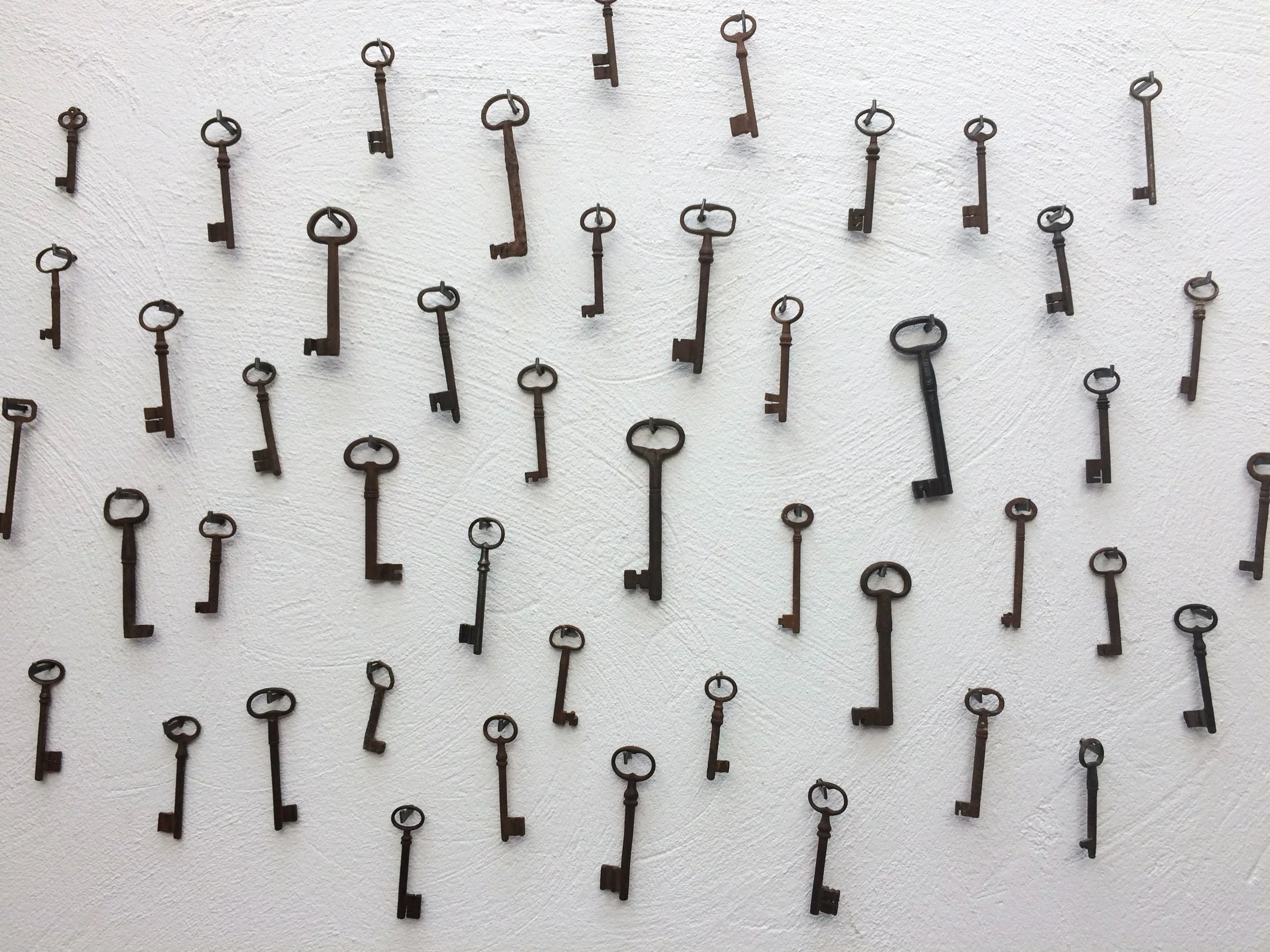
Some old keys hung on a wall in a cafe caught my eye. Standing back, and square on, this image was about the number of keys.
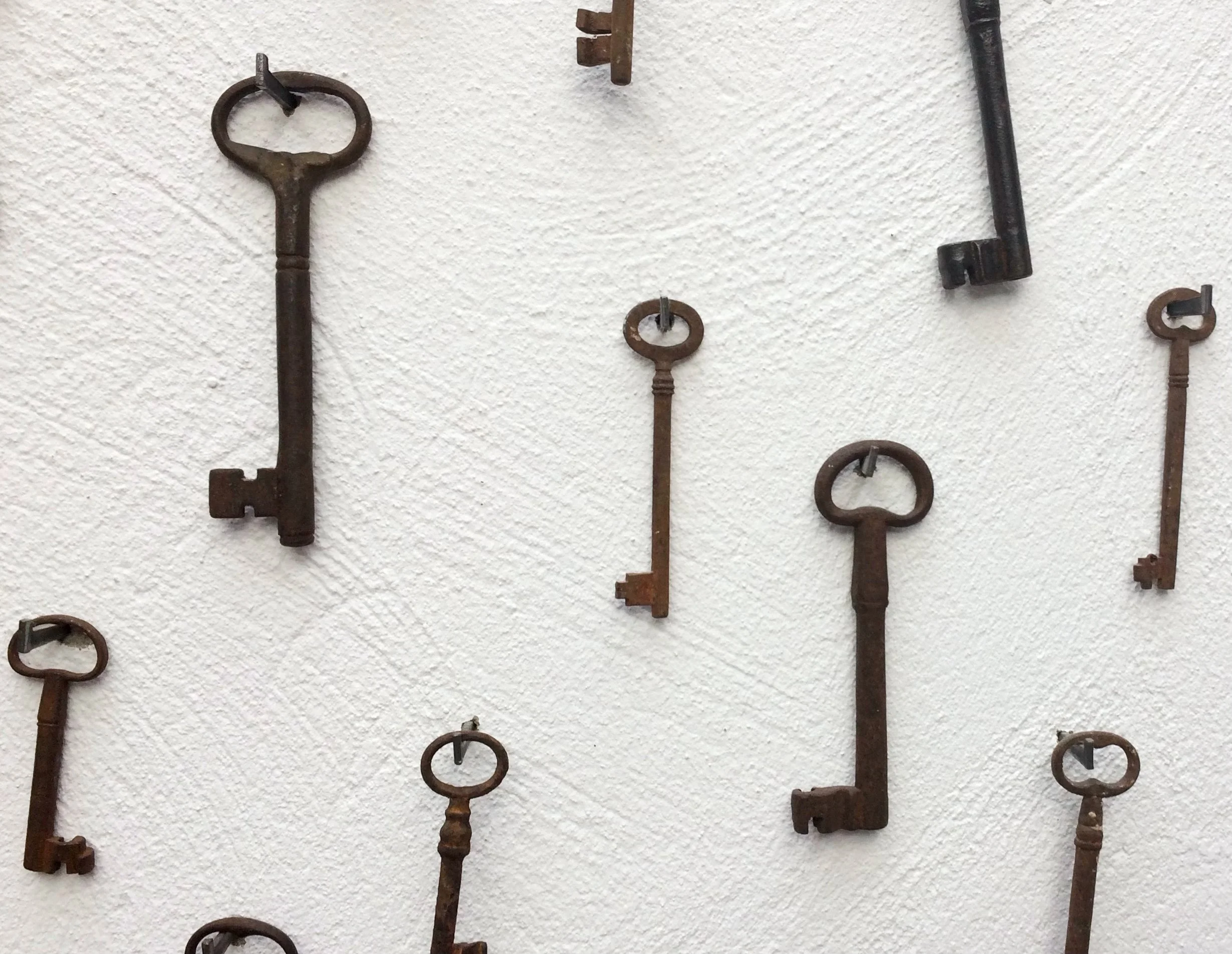
Going closer, it becomes more about their shape and texture.
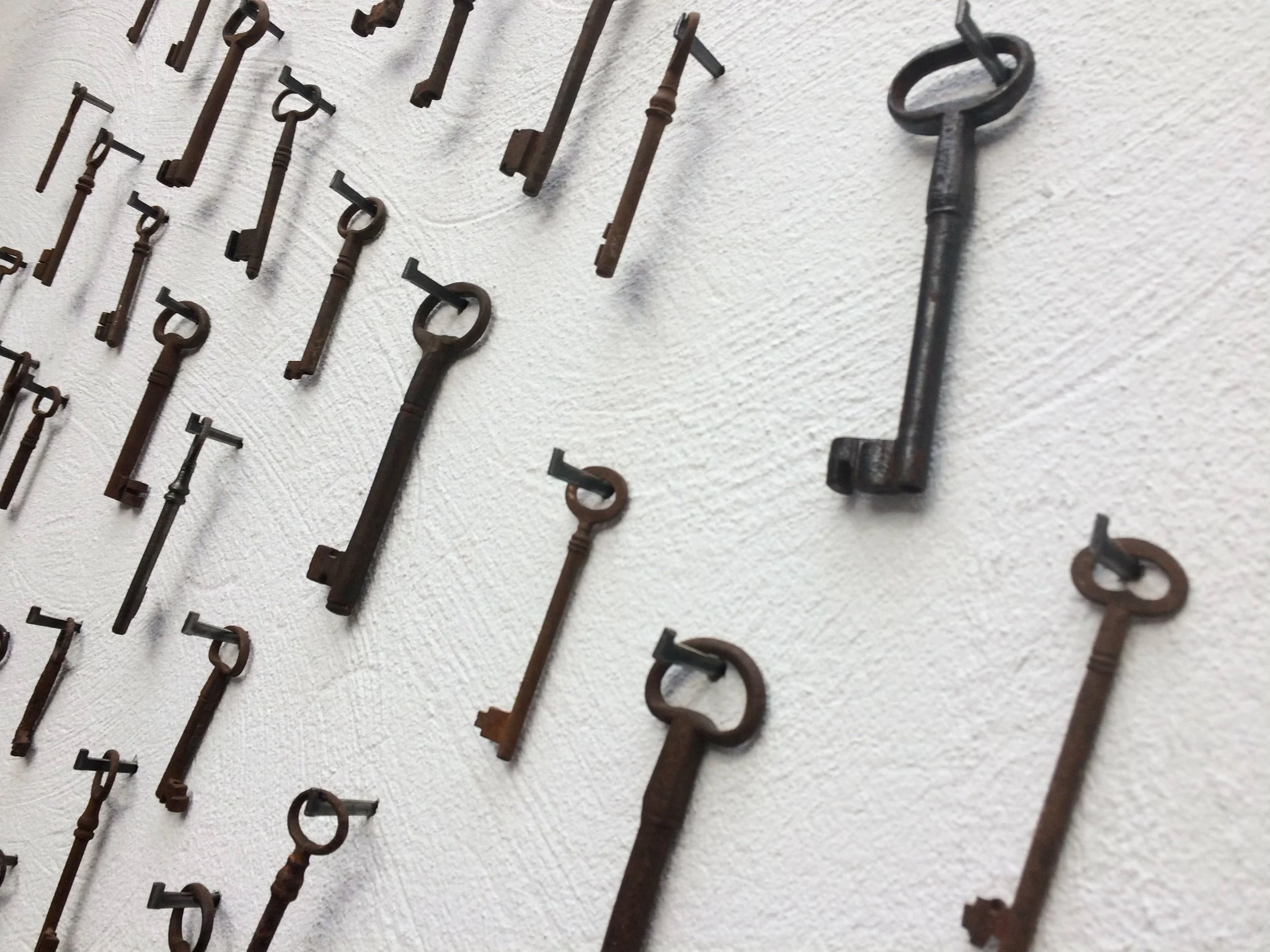
At an angle, and from below, it’s now about the lines that they make.
We learn through comparison
The more variations we have, the more there is to compare afterwards. Differences between frames - even the obviously bad ones - all help to inform what’s good from the set, and why. And this is how judgement develops. One or two images can’t do that. They can’t speak against one another.
But to be clear, it’s rarely as simple as Photo A is better than B because (say) there are no people in the background in A.
It’s more nuanced, something like: the composition is cleanest in X, but Y has stronger eye contact (and better hand position). But the wider crop in Z gives more space to breathe, and the trees in the background add to the context. These various pros and cons force us to weight our preferences and tastes more finely: which matters more? Why?
The feedback loop
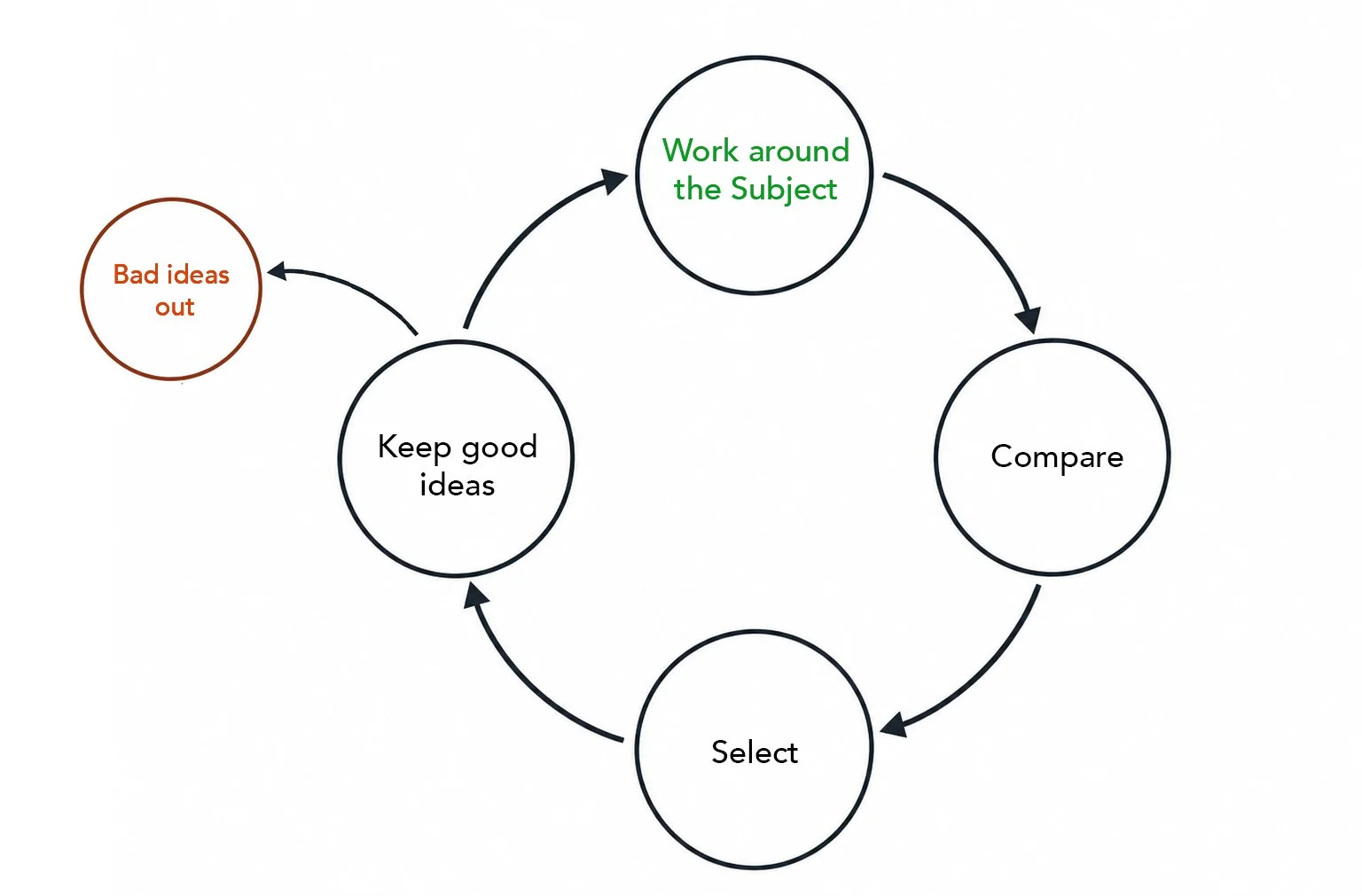
This process then feeds back into the way we photograph. The next time we’re in a similar situation - and all situations repeat in some form - we understand better what works, and what doesn’t. We can then spend our time and energy better, as we reduce the broader range of ‘things to try’ and refine it to a smaller set of ‘things which worked before’. Which is to say that the more we do it, the less random and more refined our experimentation.
And, predictably or not, it reveals that certain subjects tend to suit certain kinds of pictures. Certain compositions keep working. Certain types of subjects work best with certain ideas. It follows that we even develop a number of go-to approaches which we can fall back on. These can be as useful as the ‘safety shot’ for when everything goes wrong.