What is the Decisive Moment in photography?
We only get to choose two things: what to point the camera at, and when to press the shutter.
It’s the second part we’re looking at today: the ‘when’. It’s about timing, control (well, lack of it), and prediction.
But first, a brief paragraph about the ‘Decisive Moment’. For those who don’t know the concept, it’s often attributed to street photography pioneer Henri Cartier-Bresson, and refers to the moment when the parts of a scene (within a frame) come together in harmony, not just in terms of a unified composition (with shapes and points), but in a wider sense of cohesion.
In plain English: it’s about when to press the shutter. The idea is that within every situation there are certain moments which ‘tell the story’ better than others. For a photo of someone buying a coffee, say, it might be when the barista is handing a coffee to the customer.
Better - the customer is handing over change with their spare hand.
Better still - it’s that fraction of a second when they’re making eye contact. And so on.
You could define the Decisive Moment as the instance when the greatest number of useful pieces of information coincide. The point is that a couple of seconds either side of this interaction - without these actions, props and gestures - it’s less obvious: it becomes more about the scene than it is about the moment.
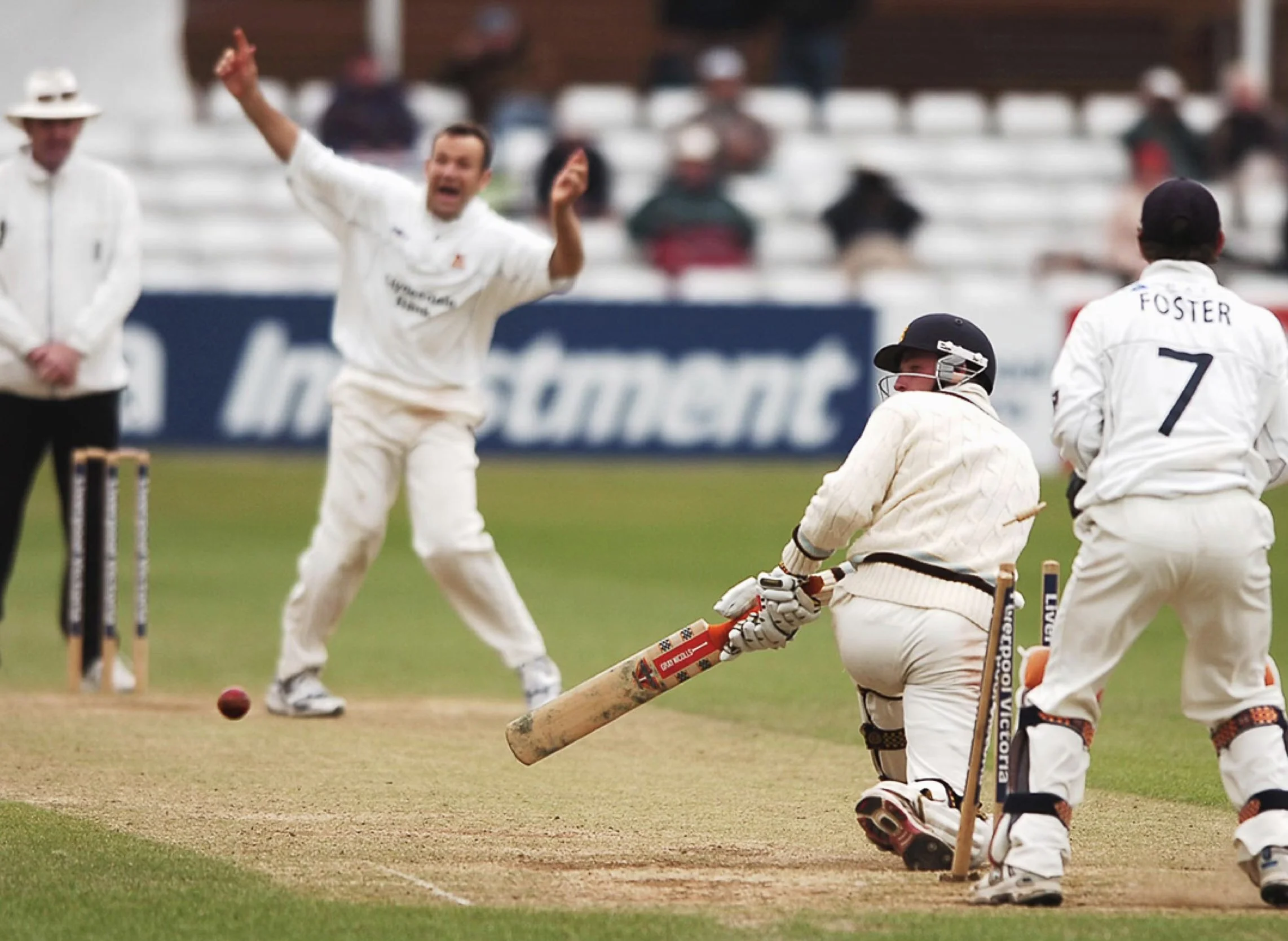
This (lucky) shot has the ball, the flying bales, the stumps askew, and the bowler celebrating. A moment later and it’s all changed. It would be a scene, but not a moment.
We can differentiate between kinds of situations. Some are urgent and specific, with blink-and-you-miss-it moments, with high stakes (news images, for instance, or sports photography, as above). But for most situations in daily life it’s less pressing, more flowing, and indeed there may be several moments in a scene which, if photographed, all relate to and clearly show what’s going on, or at least an aspect of it.
Peak moments and Clean moments
There’s another, practical part to this. Good timing is even more relevant in situations where there’s a lot going on, where you have a ‘busy’ frame. Busy in the sense that there are too many things to notice, too much which might change. Lots of people. Traffic. Things moving in the background or the edge of the frame. So, while we’re looking for these peak moments (a handshake with eye contact, a ball hitting stumps, a reactive expression, a coffee changing hands), we are also, as much as possible, wanting to map them onto clean moments (no blinks, visible hands, no weird expressions or overlapping faces, a relatively clear background without cars etc.).
It follows that sometimes the strongest photos are somewhere between the most decisive, and the cleanest.
How to improve your timing
So what do we do? There are three things to keep in mind:
Predict
We live in the world. We know how it works, and what’s likely to happen next. A conversation has a rhythm. A coffee transaction has a sequence. Traffic lights change. Cricket balls hit wickets. We need to anticipate and be ready.
Simplify
If there’s too much going on, we can often reduce chaos by moving (usually getting in closer), by changing the composition, perhaps blocking. Or cropping.
Overshoot
We can only pay attention to so much, and can control even less. As mentioned, the busier the frame, the more variables there are. Someone will blink. Someone will appear in the background carrying the vile and distracting Sainsbury’s bag of doom. Or a lorry with a massive logo will drive past. And we might not notice these things at the time. In other words: keep going after you’ve got it. Because you probably haven’t got it.
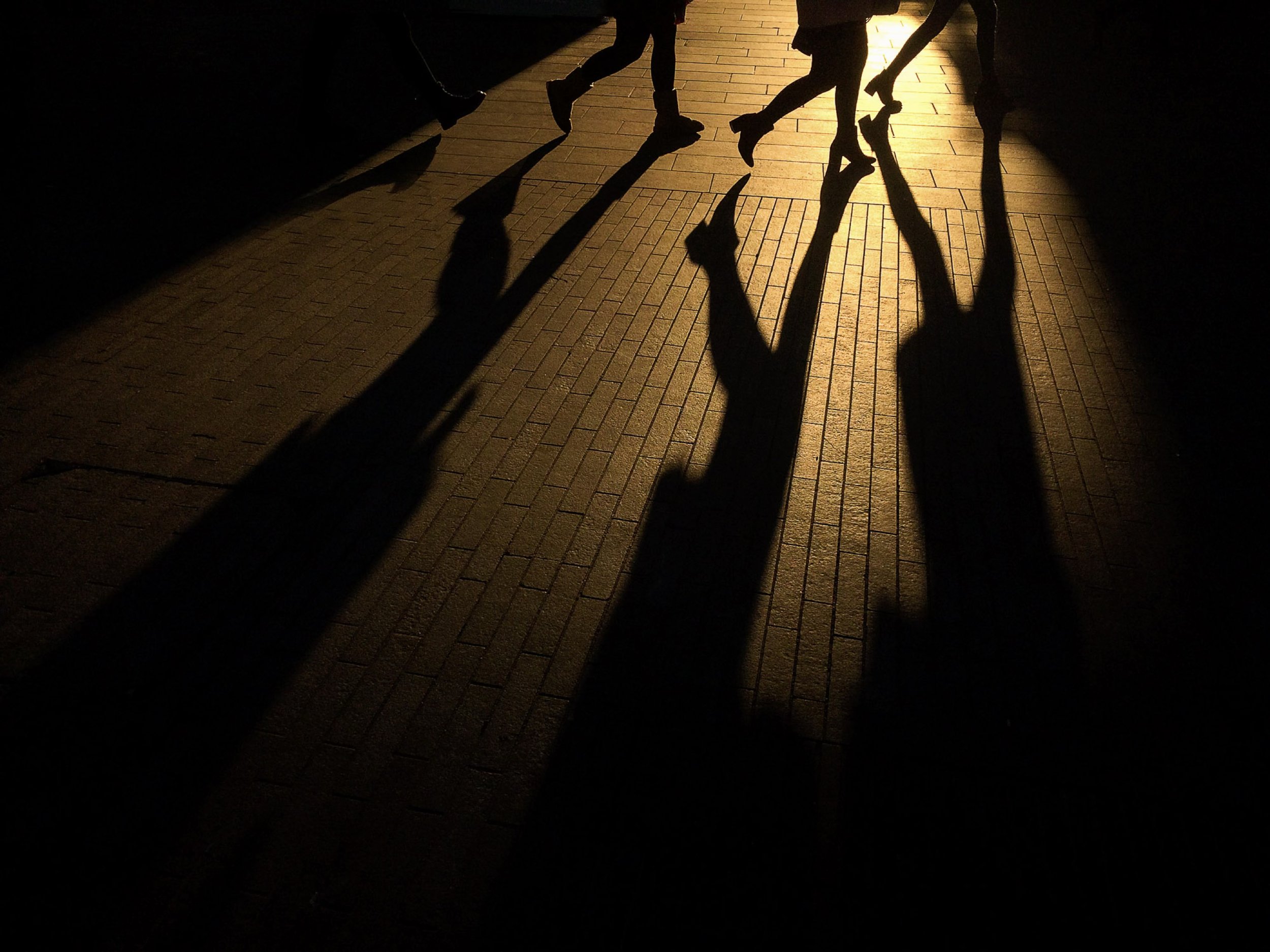
Overshooting: I’d noticed the long shadow of a commuter, so waited until more people walked across the frame, and kept shooting. The first shot had been fine, but I kept shooting: the number of people, the average angles of the legs, and that tiny gap between the woman’s shoe and the pavement, made this the best moment from the set. This relates directly to what I was talking about in Working around the Subject.